Defence, Artificial Intelligence, and a Changing World Order
Updated: Jul 23
Reflections from Crest’s London Family Office Forum
There are certain subjects that quietly move from the margins to the centre of global conversation almost overnight.
Defence and artificial intelligence are two of them.
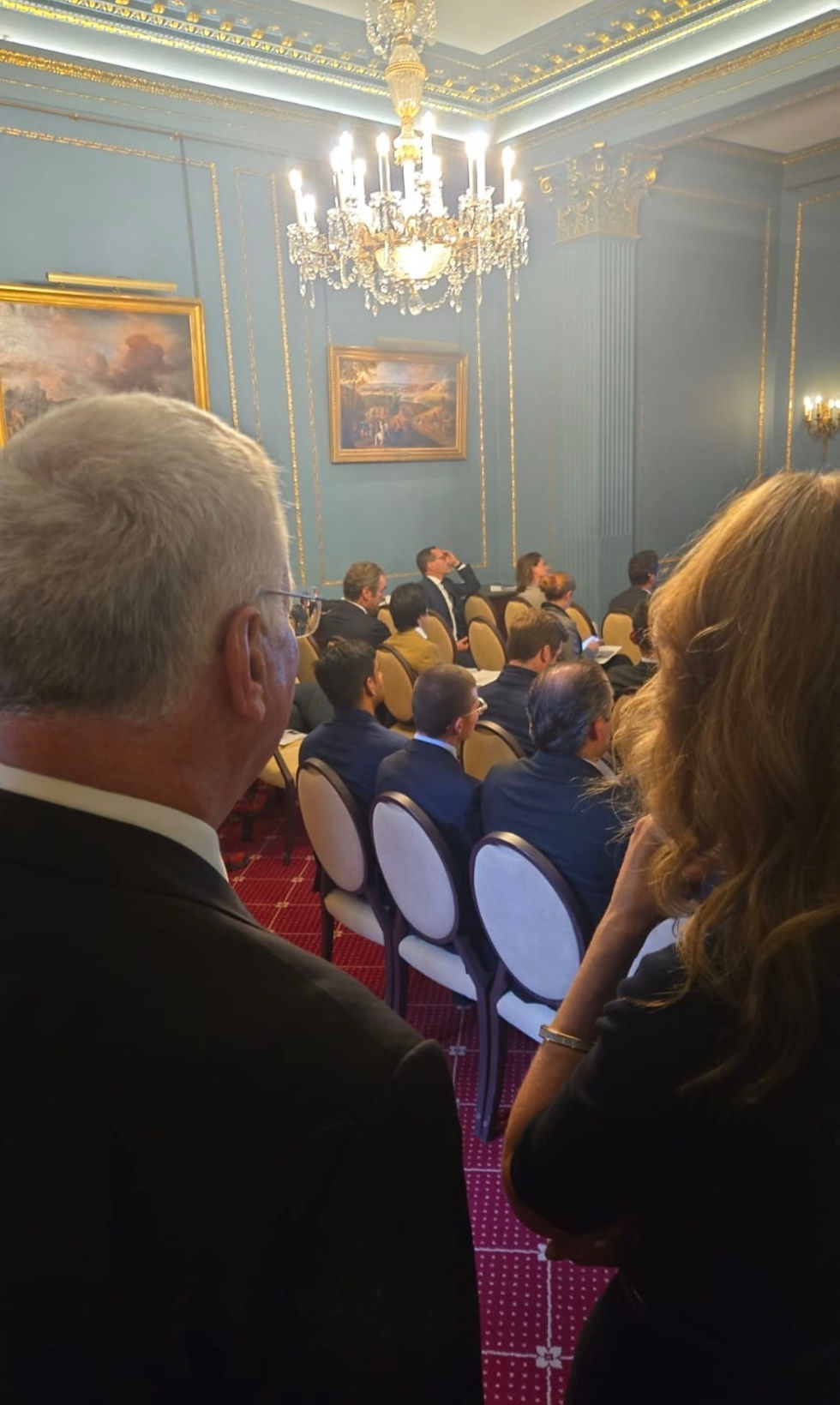
On 3 September 2025, Crest Family Office Forums welcomed family office principals, investors and executives to a private London family office forum exploring the growing intersection between defence, artificial intelligence and geopolitics.
The setting could not have felt more appropriate.
Founded in the nineteenth century and long associated with military and diplomatic history, The In & Out carries a sense of institutional memory that naturally lends itself to conversations surrounding national resilience, technological transition and geopolitical uncertainty. As guests gathered beneath portraits of military leaders and centuries of history, the contrast between tradition and the rapidly evolving future of warfare and artificial intelligence became difficult to ignore.
Only a few years ago, I suspect many family offices would not have viewed defence or AI through quite the same lens they do today. Yet global events have shifted perspectives dramatically. War in Europe, rising geopolitical tensions, cyber threats, supply chain vulnerabilities and the accelerating pace of AI development have fundamentally altered how many investors think about risk, sovereignty and long-term strategic positioning.
One of the privileges of hosting family office forums is the opportunity to bring together individuals from different sectors, countries and generations to learn alongside one another. The discussions that emerge are often far more nuanced than the headlines shaping public discourse.
Our London gathering explored not only technological innovation itself, but the broader systems surrounding it, including critical materials, sovereign capability, defence infrastructure and the ethical complexities accompanying rapid AI advancement.
The afternoon opened with a presentation from HydroGraph Clean Power focused on graphene and its emerging role in next-generation military applications.
Stepping in on short notice for CEO Kjirstin Breuer following a cancelled flight, Tom Eldridge delivered insights into how advanced materials may increasingly shape modern defence capabilities. Discussions explored graphene’s growing relevance in areas such as ballistic protection, lightweight military equipment, aerospace applications, sensors and stealth technologies. What was particularly interesting was the recognition that many of tomorrow’s defence innovations may ultimately depend not only on software and AI, but also on breakthroughs in materials science and manufacturing.
The conversation then shifted toward Israel’s role as a global leader in defence and artificial intelligence innovation.
Joshua Levinberg, Co-Founder and General Partner of JAL Ventures, shared perspectives drawn from decades of entrepreneurial and investment experience within Israel’s technology ecosystem. His discussion highlighted the unique environment that has allowed Israel to emerge as a highly concentrated centre of innovation across cybersecurity, AI, defence technologies and dual-use applications. For many in the room, the presentation reinforced the increasingly blurred lines between civilian technologies and strategic defence capabilities.
One of the most memorable presentations of the afternoon came from Huless, a Ukrainian drone company born directly from the realities of war.
Introduced by Director Vadym Burukin, the story behind Huless carried a different emotional weight than many traditional venture presentations. Unlike polished innovation hubs and well-funded laboratories often associated with emerging technology, Huless emerged under the extraordinary pressures of conflict. The company’s journey from necessity to innovation served as a reminder that some of the most transformative technologies are developed not in comfort, but in moments of extreme adversity.
The forum concluded with closing remarks from The Rt Hon Sir Michael Fallon KCB, former UK Secretary of State for Defence and Senior Advisor for Aerospace & Defence at BlueFive Capital, the multi-billion-dollar investment firm that has attracted considerable international attention for its growing activity across strategic sectors.
In introducing Sir Michael, I joked that every event host eventually reaches the delicate moment where one person stands between the audience and the drinks reception. Most speakers in that position are forced to rely on a degree of theatre to hold the room together.
Sir Michael needed none.
There is a quiet authority that comes from having served under Margaret Thatcher, John Major, David Cameron and Theresa May, particularly when speaking about defence, Europe and the changing balance of global power. As he reflected on Trump, Europe and the West, the room seemed to hang on nearly every word. His remarks were measured rather than dramatic, which somehow made them all the more compelling.
What struck me most throughout the day was not necessarily consensus, but curiosity.
Family offices are increasingly seeking opportunities to better understand the forces reshaping the world around them, not simply from an investment perspective, but from a broader generational and strategic standpoint. Defence and artificial intelligence are no longer niche sectors discussed only within government circles or specialist funds. They are now central to conversations surrounding national resilience, infrastructure, cybersecurity, energy security and the future balance of global power.
At Crest, our objective has never been simply to host presentations. It is to create environments where thoughtful people can exchange perspectives openly, ask difficult questions and continue conversations long after the formal programme concludes.
As guests moved into the reception that evening beneath the chandeliers of St. James’s Square, many discussions continued well beyond the scheduled programme. In many respects, those quieter conversations between peers are where the real value of these gatherings often emerges.
The themes explored in London would continue to surface throughout subsequent Crest forums, particularly around energy security, critical minerals, geopolitical resilience and the technologies shaping the future economy.
And if the discussions in London were any indication, defence and artificial intelligence will remain central themes for family offices for years to come.